

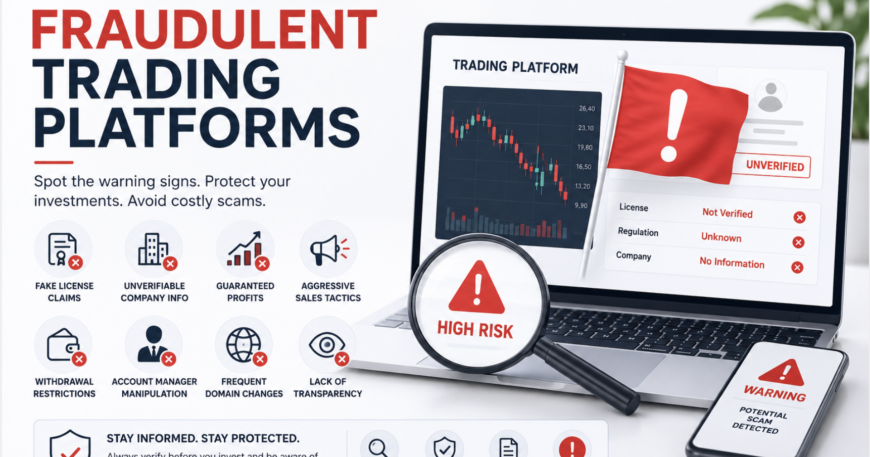
Fraudulent trading platforms continue to target investors worldwide by presenting themselves as legitimate investment opportunities. Many of these platforms use professional-looking websites, persuasive sales tactics, and misleading claims to attract deposits from unsuspecting victims.
Unfortunately, the warning signs are often overlooked until investors experience difficulties withdrawing funds or discover that the platform’s claims cannot be verified.Many of the Red Flags Found in Fraudulent Trading Platforms are visible long before investors experience financial losses. Recognizing these warning signs early can significantly reduce exposure to investment fraud.
Understanding the most common Red Flags Found in Fraudulent Trading Platforms can help investors identify risks earlier and make more informed decisions before committing funds.
At Validor, our assessments are supported by the Platform Evaluation Methodology and intelligence gathered through the Validor Scam Database, allowing us to identify recurring patterns commonly associated with high-risk investment operations.
Table of Contents
- Why Investors Miss Warning Signs
- The Most Common Red Flags Found in Fraudulent Trading Platforms
- How Validor Evaluates Fraud Indicators
- What To Do If You Notice These Red Flags
- Frequently Asked Questions
- Conclusion
Why Investors Miss Warning Signs
Many fraudulent trading platforms are designed to appear trustworthy. Their websites often include professional branding, financial terminology, impressive trading dashboards, and claims of regulatory compliance.
These features can create a false sense of legitimacy. In many reported cases, investors only discover problems after attempting to withdraw funds or verify the company’s credentials.
Learning how to identify the warning signs of investment fraud can significantly reduce the risk of becoming involved with a suspicious platform.
The Most Common Red Flags Found in Fraudulent Trading Platforms
1. Fake Regulatory Claims
One of the most common warning signs involves the misuse of regulatory information. Some platforms display licence numbers that cannot be verified, reference regulators without authorization, or falsely claim to operate under regulatory oversight.
- Fake licence numbers
- Misleading regulatory disclosures
- Unverifiable compliance claims
- False statements regarding oversight
Investors should independently verify regulatory information using official sources such as the Financial Conduct Authority (FCA) and the U.S. Securities and Exchange Commission (SEC).
Those uncertain about a platform’s legitimacy may consider obtaining a professional Broker Verification Report.
2. Unverifiable Company Information
Legitimate financial businesses generally provide clear information regarding ownership, registration, management, and operational history.
Warning signs may include:
- Anonymous ownership
- Missing registration details
- Virtual office addresses
- Unverifiable business information
- Recently created corporate entities
Investors should review our guide on determining whether a broker is legitimate before investing.
3. Guaranteed Profit Promises
No legitimate investment can guarantee profits. Fraudulent trading platforms frequently use unrealistic performance claims to attract deposits.
- Guaranteed returns
- Risk-free investments
- Daily profit promises
- Exclusive insider opportunities
- Unrealistic growth projections
These tactics frequently overlap with the behaviours discussed in our article on Common Crypto Scam Tactics in 2026.
4. Pressure to Deposit More Funds
Many victims report aggressive sales tactics designed to create urgency and encourage larger deposits.
- Constant phone calls
- Limited-time investment offers
- Pressure to increase deposits
- Requests to borrow money
- Discouragement from seeking outside advice
These methods often form part of the manipulation techniques discussed in How Fake Brokers Manipulate Victims.
5. Withdrawal Restrictions
Withdrawal issues remain one of the strongest indicators of potential risk.
- Delayed withdrawals
- Unexpected fees
- Additional tax requests
- Repeated verification demands
- Account restrictions
Investors experiencing these issues should review Why You Can’t Withdraw Funds From Trading Platforms.
If losses have already occurred, it may also be useful to review Can Stolen Funds Be Recovered?.
Among all Red Flags Found in Fraudulent Trading Platforms, withdrawal restrictions remain one of the most frequently reported concerns submitted to the Validor Scam Database.
6. Account Manager Manipulation
Fraudulent trading platforms frequently assign account managers who appear helpful but are actually trained to maximize deposits.
- Pressure to invest larger amounts
- Discouraging withdrawals
- Providing unrealistic forecasts
- Creating emotional dependency
- Offering false assurances
This behaviour frequently appears during fraud investigations and platform reviews.
7. Frequent Domain Changes
Many fraudulent trading platforms change domains regularly to avoid scrutiny and maintain operations.
- Newly registered domains
- Multiple website redirects
- Frequent rebranding
- Inconsistent business information
- Short operational histories
Investors can also review scam reporting resources provided by Action Fraud UK.
8. Lack of Transparency
Transparency remains one of the strongest indicators of legitimacy.
Warning signs include:
- Hidden ownership information
- Missing legal disclosures
- Unclear fee structures
- Incomplete terms and conditions
- Contradictory company information
A lack of transparency consistently appears among the most common Red Flags Found in Fraudulent Trading Platforms reviewed through our assessment process.
How Validor Evaluates Fraud Indicators
Validor uses a structured approach to assess potential warning signs associated with fraudulent trading platforms.
Assessment areas may include:
- Regulatory transparency
- Corporate disclosures
- Domain and website history
- User reports and complaints
- Withdrawal patterns
- Marketing practices
- Publicly available information
These findings contribute to classifications within the Validor Scam Database and support our broader Fraud Investigation Services.
For a deeper understanding of risk classifications, review How We Classify High-Risk Investment Platforms.
What To Do If You Notice These Red Flags
If you identify one or more warning signs, consider taking the following steps:
- Stop making additional deposits.
- Save all communications and transaction records.
- Verify regulatory claims independently.
- Research the platform thoroughly.
- Seek professional verification.
- Report suspicious activity where appropriate.
- Explore available recovery options.
You may also find these resources useful:
- What To Do After Being Scammed
- How Asset Recovery Works
- How To Recover Crypto From Scams
- Asset Tracing & Recovery Service
- Crypto Recovery Service
Frequently Asked Questions
What are fraudulent trading platforms?
Fraudulent trading platforms are investment operations that misrepresent their services, regulatory status, or investment opportunities to obtain funds from investors.
Are all unregulated platforms fraudulent?
No. However, the absence of regulation increases risk and requires additional due diligence before investing.
What is the most common warning sign?
Withdrawal difficulties remain one of the most frequently reported concerns associated with fraudulent trading platforms.
Can funds be recovered?
Recovery outcomes vary depending on the circumstances. Investors should preserve all records and seek professional guidance where appropriate.
Conclusion
The red flags found in fraudulent trading platforms are often visible long before investors experience financial losses. Fake regulatory claims, withdrawal restrictions, aggressive sales tactics, misleading profit promises, and poor transparency frequently appear across reported cases.
Understanding these warning signs can help investors make better decisions and reduce exposure to investment scams.
Before investing with any platform, conduct independent research, verify claims carefully, and review available information through trusted sources.
Need Help Evaluating a Trading Platform?
If you have concerns about a broker, investment platform, or crypto service, our team can help assess available information and identify potential warning signs.
Check Your Case Eligibility |
Start Your Fund Recovery Case Today
Related Resources
- Platform Evaluation Methodology
- Validor Scam Database
- How We Classify High-Risk Investment Platforms
- How to Verify a Trading Platform Before Investing
- Investment Scam Recovery FAQ
- Broker Verification Service
Why Red Flags Found in Fraudulent Trading Platforms Should Never Be Ignored
The Red Flags Found in Fraudulent Trading Platforms often appear gradually. Investors may overlook individual warning signs, but multiple indicators appearing together can suggest elevated risk.

