

How Fake Brokers Manipulate Victims in 2026 – 7 Dangerous Scam Tactics
The rise of online investing has created opportunities for legitimate traders, but it has also opened the door for sophisticated fake brokers targeting unsuspecting victims. Understanding how fake brokers manipulate victims is critical in 2026 because scam platforms are becoming increasingly advanced and psychologically manipulative.
These fake investment platforms use fabricated profits, fake licenses, emotional pressure, and withdrawal restrictions to convince victims to deposit larger amounts of money over time.
Many victims only discover the fraud after attempting to withdraw funds and encountering endless delays, hidden fees, or complete account restrictions.
Table of Contents
- What Is a Fake Broker?
- How Fake Brokers Manipulate Victims
- The Psychology Behind Broker Scams
- Common Red Flags
- Fake Withdrawal Tactics
- How To Protect Yourself
- What To Do If You Sent Money
What Is a Fake Broker?
A fake broker is a fraudulent investment platform pretending to provide legitimate trading or wealth management services.
These scams often claim expertise in:
- Cryptocurrency trading
- Forex investments
- Stock market opportunities
- Binary options
- AI-powered trading systems
- Wealth management services
Most fake broker websites look highly professional and may include:
- Fake customer reviews
- Fabricated trading dashboards
- Stolen regulatory information
- False company addresses
- Fake awards and certificates
If you are unsure whether a platform is legitimate, review this guide: How to Verify a Trading Platform Before Investing.
How Fake Brokers Manipulate Victims
1. Fake Profits and Trading Dashboards
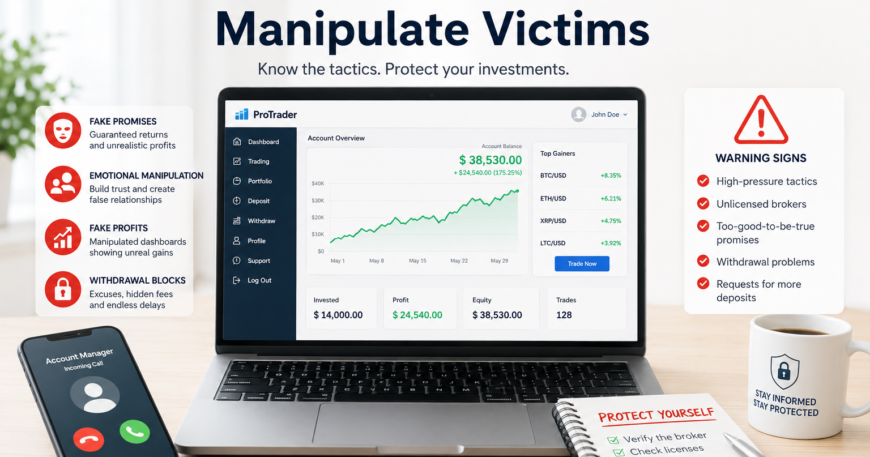
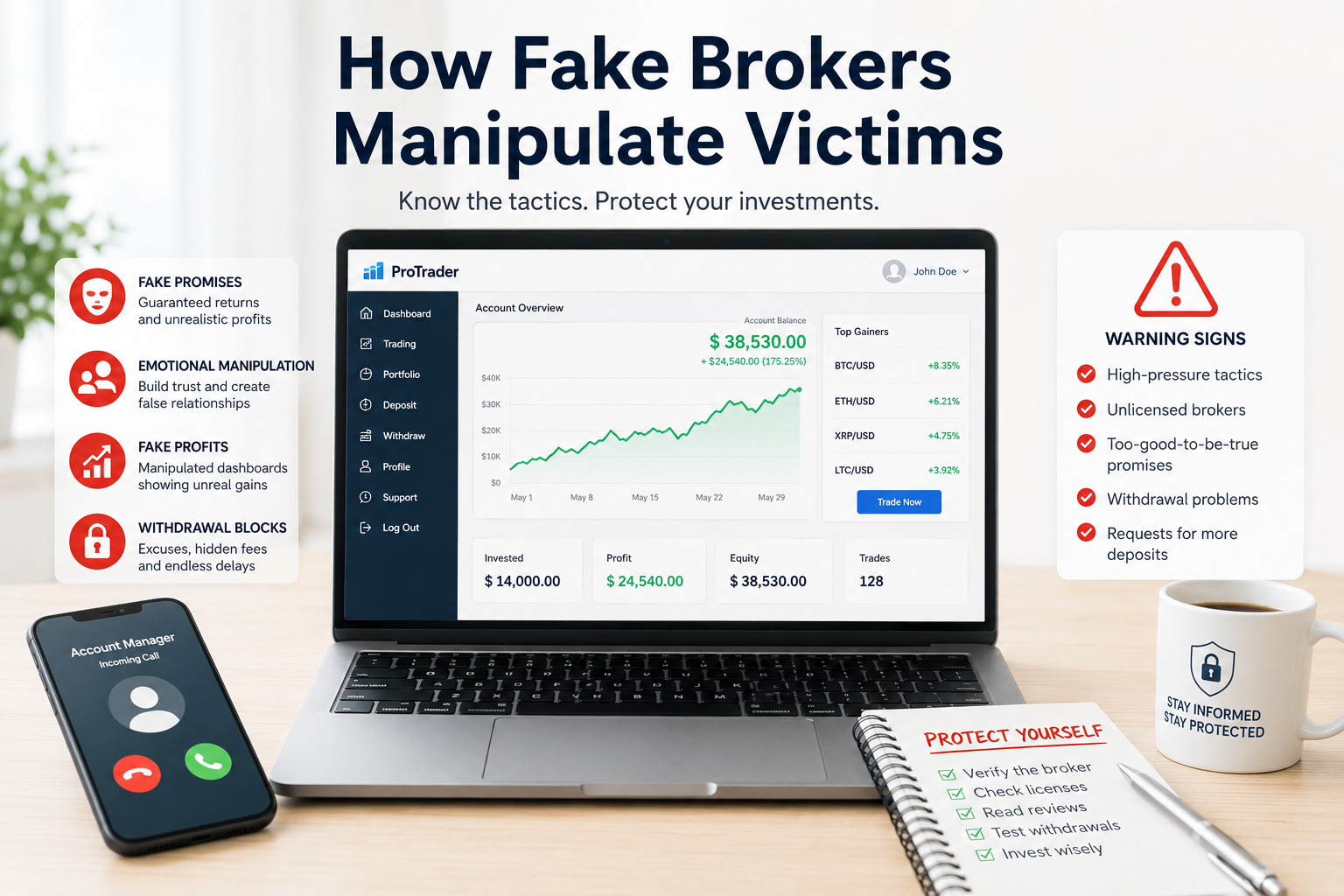
One of the most effective ways fake brokers manipulate victims is through fabricated trading dashboards showing unrealistic profits.
Victims may deposit £250 and quickly see fake balances rise to thousands within days. These numbers are often completely artificial and designed to encourage larger investments.
Learn more about fake investment platforms here: Platform Evaluation Methodology
.
2. Psychological Manipulation
Scammers use emotional pressure and urgency to force victims into quick financial decisions.
Common phrases include:
- “This investment opportunity ends today.”
- “Bitcoin is about to explode.”
- “VIP clients are earning massive returns.”
- “You must act immediately.”
This pressure creates fear of missing out and reduces logical decision-making.
3. Fake Account Managers
Fraudulent brokers often assign “account managers” who build trust through frequent phone calls and emotional conversations.
These scammers may pretend to care about your financial future while gradually convincing you to deposit more money.
4. Withdrawal Restrictions
Many victims only realize the scam when attempting to withdraw funds.
Fake brokers often demand:
- Verification fees
- Tax payments
- Account upgrades
- Liquidity fees
- Anti-money laundering charges
If you cannot withdraw your funds, read: Why You Can’t Withdraw Funds From Trading Platforms
.
The Psychology Behind Broker Scams
Understanding how fake brokers manipulate victims also requires understanding scam psychology.
Fear of Missing Out (FOMO)
Scammers create urgency to pressure victims into rushed investment decisions.
Authority Manipulation
Fraudsters pretend to be financial experts, analysts, or wealth managers to appear trustworthy.
Social Proof
Fake reviews and fabricated success stories create the illusion of legitimacy.
Gradual Commitment
Scammers usually start with small deposits before pressuring victims into larger investments.
This tactic is commonly associated with pig butchering scams and long-term financial manipulation.
Common Red Flags of Fake Brokers
Recognizing warning signs early can help protect your finances.
- Guaranteed profits
- Pressure to deposit quickly
- Fake celebrity endorsements
- WhatsApp-only communication
- Unlicensed platforms
- Withdrawal problems
- Crypto-only deposits
- Requests for remote computer access
You can also review: Signs of Investment Fraud in 2026
.
Verify suspicious brokers using: Broker Verification Services
.
Fake Withdrawal Tactics
Verification Fee Scam
Victims are told they must pay additional fees before withdrawals can be released.
Tax Scam
Fraudsters falsely claim taxes must be prepaid directly to the platform.
Account Upgrade Scam
Victims are pressured to deposit even more money to unlock withdrawals.
Endless Delays
Support teams disappear or delay responses indefinitely after large deposits are made.
Learn how professional investigations work: Fraud Investigation Service
.
How To Protect Yourself From Fake Brokers
Verify Regulation
Always verify broker licenses independently before investing.
Research Reviews Carefully
Many online reviews are fake or manipulated.
Avoid High-Pressure Sales Tactics
Legitimate investment companies do not pressure clients into rushed decisions.
Test Withdrawals Early
Before investing larger amounts, test whether withdrawals actually work.
You can also review: Is My Broker Legit?
.
What To Do If You Sent Money
If you suspect you have been targeted by a fake broker scam:
- Stop sending money immediately
- Save all communication and screenshots
- Contact your bank or payment provider
- Report the scam to financial authorities
- Change passwords connected to the scam
- Remove remote access software
“`html
External Resources and Scam Reporting
Before investing with any online broker, it is important to verify regulatory status and review official fraud warnings.
Review these helpful resources:
- What To Do After Being Scammed
- Can Stolen Funds Be Recovered?
- How To Recover Crypto From Scams
- How Asset Recovery Works
- Asset Tracing & Recovery
- Crypto Recovery Services
- Check Your Case Eligibility
- Start Your Fund Recovery Case Today
Conclusion
Understanding how fake brokers manipulate victims is one of the strongest defenses against online investment fraud.
These scams are designed to exploit emotion, urgency, trust, and financial ambition. The more informed investors become, the harder it becomes for scammers to succeed.
Always verify investment platforms carefully, avoid pressure tactics, and remain cautious of promises that sound too good to be true.

