

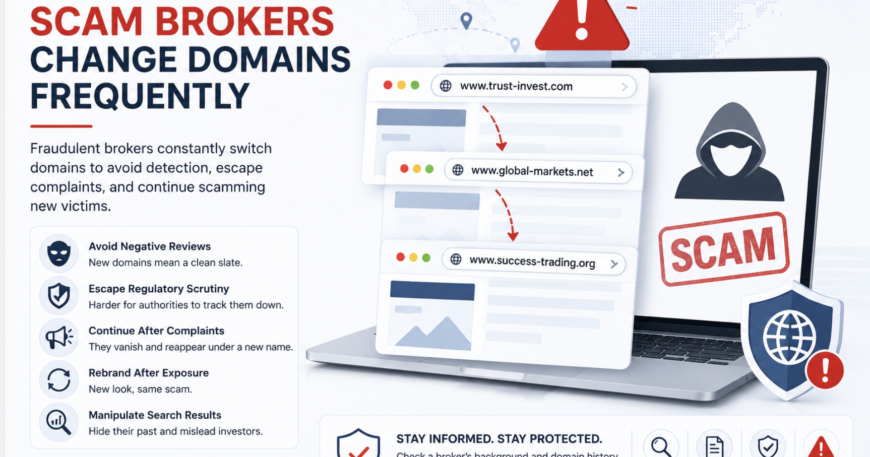
Why Scam Brokers Change Domains Frequently
Online investment fraud continues to evolve, and one of the most common tactics used by suspicious brokers is changing website domains. Investors often discover that a broker they previously used has disappeared, rebranded, or migrated to a new website address without explanation.
Understanding Why Scam Brokers Change Domains Frequently can help investors identify potential warning signs before significant financial losses occur. Domain changes are not always evidence of fraud, but when combined with other risk indicators, they may reveal patterns commonly associated with high-risk investment platforms.
Understanding Why Scam Brokers Change Domains Frequently is important because domain switching is one of the recurring warning signs identified during investment platform investigations.
At Validor, domain history analysis forms an important part of our Platform Evaluation Methodology and contributes to risk assessments within the Validor Scam Database.
Table of Contents
- Understanding Domain Changes in Online Investment Fraud
- Why Scam Brokers Change Domains Frequently
- How Domain Changes Can Affect Investors
- Warning Signs of Frequent Domain Switching
- How Validor Tracks Domain Changes
- What To Do If a Broker Changes Its Domain
- Frequently Asked Questions
- Conclusion
Understanding Domain Changes in Online Investment Fraud
A domain name is often one of the most visible parts of an online investment platform. Legitimate financial companies typically maintain stable websites and consistent branding over long periods of time.
By contrast, some fraudulent brokers frequently move from one domain to another. This practice can make it more difficult for regulators, victims, search engines, and investigators to track their activities.
Many of the warning signs discussed in Red Flags Found in Fraudulent Trading Platforms are often accompanied by repeated domain changes.
Why Scam Brokers Change Domains Frequently
1. To Avoid Negative Reviews
As complaints accumulate online, scam brokers may abandon a domain and launch a new website under a different name. This allows them to distance themselves from negative reviews, complaints, and public warnings.
By creating a fresh online presence, they may attempt to attract new victims who are unaware of the platform’s previous history.
2. To Escape Regulatory Attention
Regulators around the world regularly publish warnings about suspicious investment platforms.
When a broker becomes the subject of increased scrutiny, changing domains may help operators continue their activities while reducing visibility associated with previous warnings.
Investors should always verify regulatory claims independently and review available public records before investing.
Investors should independently verify regulatory claims using official sources such as the Financial Conduct Authority (FCA), the U.S. Securities and Exchange Commission (SEC), and the Financial Industry Regulatory Authority (FINRA).
3. To Continue Operating After Complaints
Some platforms receive a growing number of complaints regarding:
- Withdrawal delays
- Account restrictions
- Unexpected fees
- Communication issues
- Unresolved disputes
Instead of addressing these concerns, operators may simply launch a new website and continue business under a different brand.
Investors experiencing withdrawal problems should review Why You Can’t Withdraw Funds From Trading Platforms.
4. To Rebrand After Exposure
Fraud investigations, public warnings, and media exposure can significantly damage a platform’s reputation.
Domain changes often accompany:
- Company name changes
- New logos and branding
- Modified marketing materials
- Fresh social media profiles
While the website appears new, the underlying operation may remain unchanged.
5. To Manipulate Search Results
Search engines often associate domains with reviews, complaints, and historical information.
By changing domains, operators may attempt to reduce the visibility of negative content and create a cleaner online reputation.
This tactic can make due diligence more difficult for investors conducting basic online research.
How Domain Changes Can Affect Investors
Frequent domain switching creates challenges for investors attempting to verify a broker’s legitimacy.
Potential consequences include:
- Difficulty locating historical reviews
- Reduced transparency
- Confusion regarding company ownership
- Challenges tracking complaint histories
- Increased risk of misrepresentation
These concerns often overlap with the risk indicators discussed in How We Classify High-Risk Investment Platforms.
Investors can also review fraud alerts and consumer warnings published by Action Fraud UK and other official regulatory bodies.
Warning Signs of Frequent Domain Switching
Investors should pay attention to the following indicators:
- Recently registered domains
- Multiple domain redirects
- Frequent website rebranding
- Inconsistent contact information
- Different company names across websites
- Missing corporate disclosures
- Limited operational history
Additional warning signs are covered in our guide on Signs of Investment Fraud in 2026.
Understanding Why Scam Brokers Change Domains Frequently can help investors identify suspicious behaviour before additional funds are deposited.
How Validor Tracks Domain Changes
Domain analysis is one component of Validor’s platform evaluation process.
Areas reviewed may include:
- Domain registration history
- Website age
- Previous domain associations
- Archived website content
- User-reported complaints
- Publicly available information
This information contributes to assessments within the Validor Scam Database and supports our broader Fraud Investigation Services.
Investors seeking additional verification may also benefit from our Broker Verification Service.
What To Do If a Broker Changes Its Domain
If a broker unexpectedly changes its website address, investors should take the following precautions:
- Verify the new domain independently.
- Review historical company information.
- Check for regulatory disclosures.
- Search for investor complaints.
- Avoid making additional deposits until verification is complete.
- Preserve all communications and transaction records.
Additional guidance can be found in:
- How to Verify a Trading Platform Before Investing
- Is My Broker Legit?
- What To Do After Being Scammed
Frequently Asked Questions
Do all brokers that change domains operate fraudulently?
No. Legitimate businesses may occasionally rebrand or update domains. However, repeated unexplained domain changes should be reviewed carefully.
How can I check a domain’s history?
Public WHOIS records, web archives, and independent verification services can provide useful information regarding domain history.
Why do scam brokers create new websites?
New websites can help operators distance themselves from complaints, regulatory warnings, and negative publicity.
Can domain changes indicate higher risk?
Domain changes alone do not prove fraud, but they may contribute to an elevated risk assessment when combined with other warning signs.
Conclusion
Understanding Why Scam Brokers Change Domains Frequently can help investors recognize patterns commonly associated with suspicious investment platforms.
While not every domain change indicates fraudulent activity, repeated rebranding, inconsistent company information, and efforts to avoid scrutiny should encourage additional due diligence.
Investors should always verify company claims independently, review platform histories carefully, and exercise caution before committing funds to any investment opportunity.
Concerned About a Broker or Trading Platform?
Our team can help review available information, identify potential warning signs, and assess whether further investigation may be appropriate.
Check Your Case Eligibility |
Start Your Fund Recovery Case Today

