

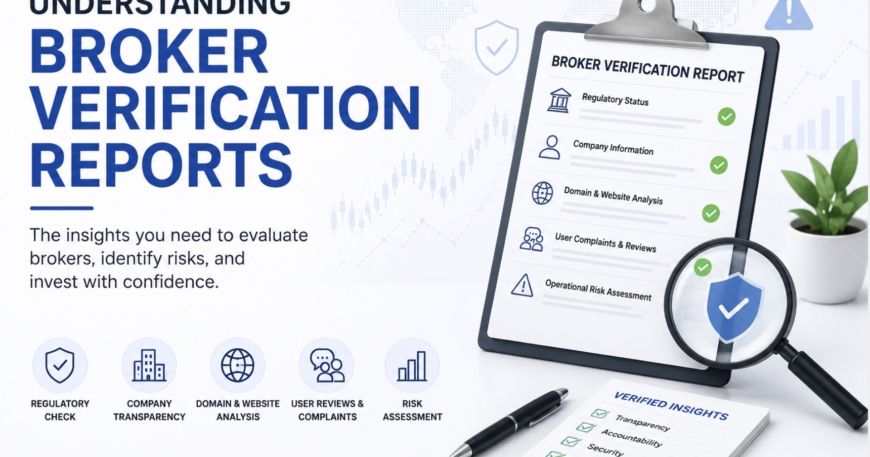
Understanding Broker Verification Reports
Online investment platforms continue to grow in popularity, but so do the risks associated with fraudulent brokers, misleading investment opportunities, and unverified trading platforms. Understanding Broker Verification Reports can help investors perform due diligence before committing funds and avoid many of the warning signs associated with investment fraud.
At Validor, broker verification forms an important part of our broader platform assessment process. Through our Platform Evaluation Methodology and ongoing monitoring within the Validor Scam Database, we review publicly available information, operational indicators, and risk factors that may assist investors in evaluating online trading platforms.
Understanding Broker Verification Reports is essential for investors seeking greater transparency before engaging with brokers, investment platforms, cryptocurrency services, or financial advisors operating online.
Table of Contents
- What Is a Broker Verification Report?
- Why Broker Verification Reports Matter
- Key Areas Reviewed During Broker Verification
- How Broker Verification Reports Help Investors
- Common Misconceptions About Broker Verification
- When Investors Should Request a Verification Report
- Frequently Asked Questions
- Conclusion
What Is a Broker Verification Report?
A broker verification report is a structured assessment that reviews publicly available information relating to a broker, trading platform, investment company, or financial service provider.
The objective is not to determine guilt or innocence but rather to identify transparency indicators, potential concerns, inconsistencies, and risk factors that investors may wish to consider before investing.
Understanding Broker Verification Reports helps investors move beyond marketing materials and evaluate whether a platform provides sufficient information regarding its operations, ownership, regulatory disclosures, and business practices.
Many investors first seek verification after reading guides such as Is My Broker Legit? or How to Verify a Trading Platform Before Investing.
Why Broker Verification Reports Matter
Investment fraud continues to affect individuals worldwide. Fraudulent platforms often appear professional, offer attractive investment opportunities, and present convincing marketing materials.
Unfortunately, appearance alone does not confirm legitimacy.
Understanding Broker Verification Reports can help investors identify concerns before funds are deposited and reduce exposure to unnecessary risk.
A verification report may help:
- Identify transparency issues
- Review regulatory disclosures
- Assess operational history
- Evaluate website credibility
- Highlight potential warning signs
- Support independent due diligence
Many of these indicators overlap with the risk factors discussed in How We Classify High-Risk Investment Platforms.
Key Areas Reviewed During Broker Verification
Regulatory Status
One of the most important aspects of broker verification involves reviewing regulatory disclosures.
Questions may include:
- Does the broker claim regulatory oversight?
- Are licence numbers disclosed?
- Can regulatory information be independently verified?
- Do disclosures match publicly available records?
Investors can independently review regulatory information through organizations such as the Financial Conduct Authority (FCA), the U.S. Securities and Exchange Commission (SEC), and FINRA.
Corporate Transparency
Legitimate businesses typically provide information regarding ownership, management, corporate registration, and operating locations.
Potential concerns may include:
- Anonymous ownership
- Missing corporate details
- Unverifiable addresses
- Inconsistent business information
Transparency remains one of the most important indicators reviewed during broker verification.
Domain and Website Analysis
Website analysis can reveal important information regarding a broker’s operational history.
Areas reviewed may include:
- Domain registration history
- Website age
- Ownership changes
- Frequent rebranding
- Archived website content
Investors should pay particular attention to patterns discussed in Why Scam Brokers Change Domains Frequently.
User Complaints and Public Reports
Investor experiences often provide valuable insights into platform operations.
Verification reviews may consider:
- Withdrawal complaints
- Customer service issues
- Aggressive sales tactics
- Unexpected charges
- Account restrictions
Many of these warning signs also appear in Red Flags Found in Fraudulent Trading Platforms.
Withdrawal and Operational Concerns
Difficulty accessing funds remains one of the most frequently reported concerns among investors.
Common issues include:
- Delayed withdrawals
- Unexpected verification requests
- Additional fees
- Communication breakdowns
- Account restrictions
If you are experiencing these issues, review Why You Can’t Withdraw Funds From Trading Platforms.
How Broker Verification Reports Help Investors
Understanding Broker Verification Reports allows investors to make more informed decisions before investing.
Verification reports may:
- Improve investor awareness
- Support risk assessment
- Highlight missing information
- Identify warning signs
- Encourage independent research
These reports can be particularly useful when evaluating unfamiliar brokers or newly launched investment platforms.
Common Misconceptions About Broker Verification
A Verification Report Guarantees Safety
No verification report can eliminate investment risk. Markets remain inherently uncertain, and fraud tactics continue to evolve.
All Unregulated Platforms Are Fraudulent
While lack of regulation can increase risk, it does not automatically indicate fraudulent activity. Multiple factors should be evaluated collectively.
Professional Websites Mean Legitimate Operations
Many fraudulent platforms invest heavily in website design and marketing. Investors should always verify information independently.
Official fraud warnings and consumer alerts can also be reviewed through Action Fraud UK.
When Investors Should Request a Verification Report
A verification report may be beneficial when:
- Considering a new broker
- Investing significant funds
- Evaluating cryptocurrency platforms
- Reviewing offshore brokers
- Investigating withdrawal issues
- Researching suspicious activity
Investors may also benefit from our Broker Verification Service for additional assistance.
Frequently Asked Questions
What is included in a broker verification report?
Reports typically review transparency indicators, regulatory disclosures, website history, operational concerns, and publicly available information.
Can a broker verification report confirm fraud?
No. Verification reports identify risk indicators and transparency concerns but do not determine legal liability.
Why is Understanding Broker Verification Reports important?
Understanding Broker Verification Reports helps investors evaluate potential risks before investing and supports informed decision-making.
Can verification reports help identify warning signs?
Yes. Verification reports often highlight transparency concerns, withdrawal issues, domain history patterns, and other indicators requiring further review.
Conclusion
Understanding Broker Verification Reports is an important part of responsible investing. While no report can eliminate all risk, structured verification can help investors identify warning signs, evaluate transparency, and make more informed decisions.
Combining verification reports with independent research, regulatory checks, and careful due diligence can significantly improve investor awareness and reduce exposure to potentially harmful investment opportunities.
Need Help Evaluating a Broker?
If you are considering an investment platform or have concerns regarding a broker’s legitimacy, our team may be able to assist with additional verification and case assessment.
Check Your Case Eligibility |
Start Your Fund Recovery Case Today

