

Transaction Analysis
Tracing Financial Activity to Establish Clarity and Recovery Pathways
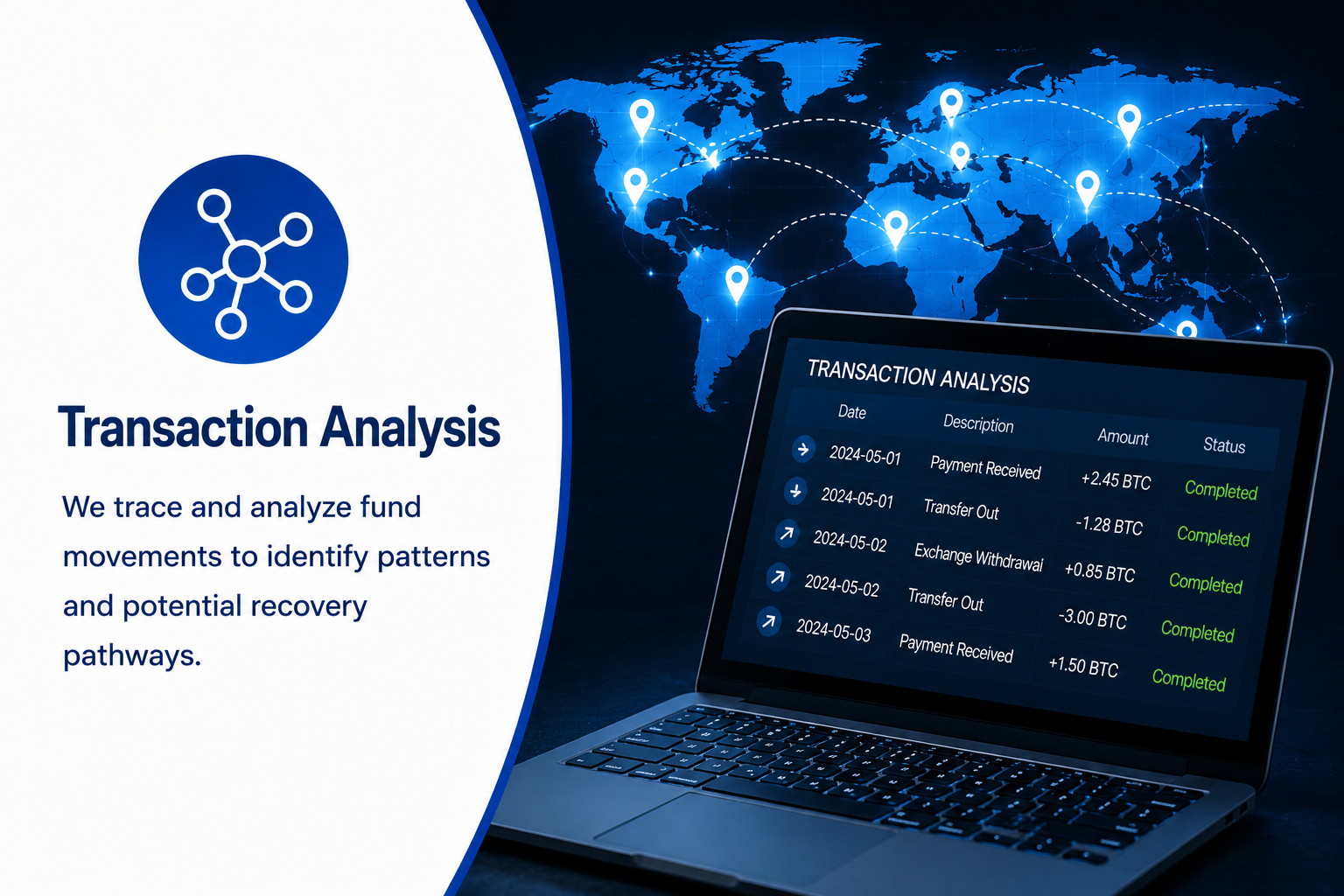
Transaction analysis is a critical component of the financial recovery process. By examining how funds have moved across wallets, exchanges, and financial networks, we establish a clear evidential foundation that supports both recovery efforts and informed decision-making.
This process builds directly on insights from your Case Assessment and contributes to both Risk Evaluation and Recovery Strategy.
What Is Transaction Analysis?
Transaction analysis involves the structured examination of financial data to trace the movement of funds, identify patterns, and uncover connections between accounts or entities.
Using advanced analytical tools and blockchain intelligence, we map financial flows and identify indicators that may influence recovery feasibility.
How We Analyze Transactions
Fund Flow Mapping
We trace how funds move across different accounts, wallets, or platforms, identifying transfer paths and key transaction points.
Pattern Identification
We analyze transaction behavior to detect recurring patterns, anomalies, or structures commonly associated with high-risk platforms. For examples of these indicators, see our scam warning signs guide.
Linked Entity Detection
Where possible, we identify connections between wallets, accounts, or entities, helping to build a broader understanding of the network involved.
Data Correlation
Transaction data is cross-referenced with case information and external indicators to ensure consistency and accuracy in findings.
Why Transaction Analysis Matters
Without a clear understanding of how funds have moved, recovery efforts are often based on incomplete information. Transaction analysis provides the clarity needed to:
- Identify potential recovery points
- Understand the structure of financial flows
- Detect inconsistencies or red flags
- Support informed strategic decisions
This process aligns with the analytical principles outlined in our platform evaluation methodology.
Building an Evidential Trail
A key outcome of transaction analysis is the creation of a clear evidential trail. This documentation may support:
- Recovery planning and strategic actions
- Engagement with financial institutions
- Regulatory or legal escalation where appropriate
For guidance on reporting financial issues, refer to our reporting guide.
Integration With the Recovery Process
Transaction analysis does not operate in isolation. It plays a central role in informing:
- Risk Evaluation — by identifying technical and traceability limitations
- Recovery Strategy — by defining realistic recovery pathways
Each stage builds on the clarity established through transaction data, ensuring a consistent and structured approach.
A Realistic, Evidence-Based Approach
While transaction analysis can provide valuable insights, outcomes depend on factors such as data availability, platform structure, and jurisdictional constraints.
Our role is to present findings clearly and objectively — without assumptions or overstatement — so that all decisions are based on verifiable evidence.
If you are experiencing issues such as delayed or blocked withdrawals, you may also find our withdrawal issue analysis
helpful.
Confidential & Professional
All transaction analysis is conducted with strict confidentiality and professional standards.
- Secure handling of financial data
- Independent, unbiased analysis
- No obligation to proceed beyond assessment
All transaction analysis is conducted using structured methodologies and verifiable data — not assumptions.